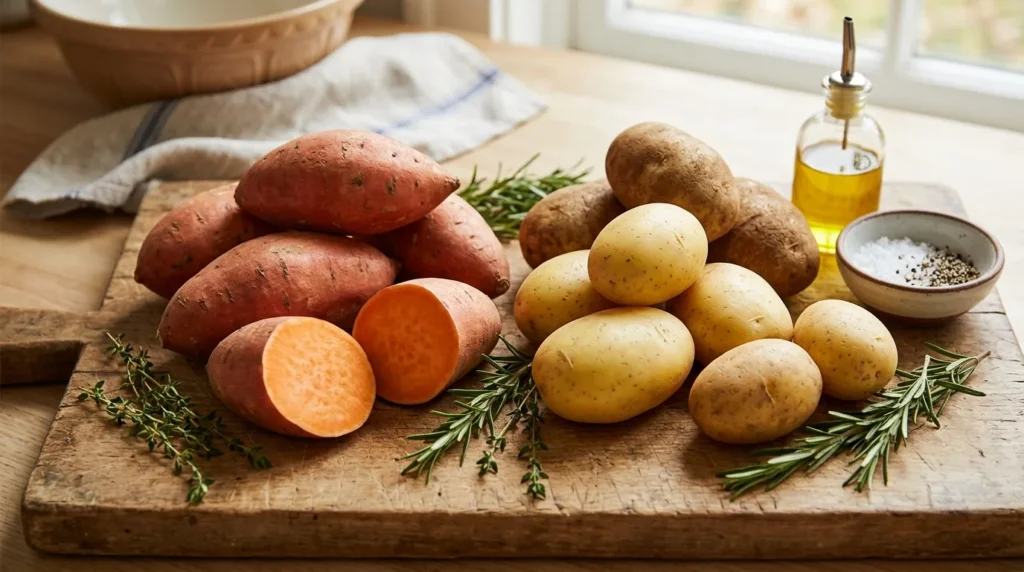
Despite being one of the most common elements in daily cookery, potatoes are often handled as if they are all the same. It’s easy to pick up a bag at the grocery store without considering how the diversity will affect the final dinner. However, the texture, moisture level, starch content, flavor, and cooking performance of potatoes may vary greatly.
It might be simpler to choose a potato variety that complements the dish you are cooking if you are aware of the many types of potatoes. The correct selection might result in firm potatoes that maintain their form in salads and soups, crisp roasted potatoes, or fluffy mashed potatoes.
The Impact Of Starch Content
The starch content of potato varieties is one of their most significant differentiators. After cooking, certain potatoes have a dry, fluffy texture and comparatively high carbohydrate content. When baking, mashing, or making foods where a light interior is desired, these types may be very useful.
Some potatoes are more moist and have a waxier texture. They work well in recipes where keeping their form is crucial since they have a tendency to remain firm when cooked. If you use an extremely starchy potato in a dish that calls for firm chunks, the potatoes may crumble or become too mushy.
Comprehending this fundamental distinction helps enhance the uniformity of several potato-based recipes.
The Final Dish’s Texture
A potato dish’s level of enjoyment is greatly influenced by its texture. Think of mashed potatoes. With very little work, a variety with the proper texture may become fluffy and silky. A denser outcome could be produced by a waxier type.
For roasting, the same idea holds true. While some potatoes keep a harder, creamier texture, others have crisp exteriors and mushy cores. Neither quality is inherently superior. Your desired outcome will determine the best option.
Home chefs may choose items based on feel rather than just availability or look by being familiar with the many types of potatoes.
Not Every Flavor Is The Same
Potatoes are typically regarded as mild; however, there may be discernible flavor changes between different kinds. Some have an earthy flavor, while others have a buttery, nutty, or somewhat sweet flavor. When potatoes are the primary ingredient in simple meals, these differences could be very apparent.
To make a tasty side dish, a flavourful potato can just need a simple spice. A mild version may serve as a helpful base without overpowering other flavors in dishes that use sauces, herbs, vegetables, or other strong ingredients.
Thus, making flavor-based decisions may elevate regular cooking to a new level of consideration.
Cooking Techniques Are Important
Your choice of potato should be influenced by the cooking method. Potatoes that are meant to be fried must have qualities that assist in producing a crisp outside without being too thick. In general, potatoes used in soups should retain enough structure to keep from dissolving into the broth.
Firm kinds may be helpful for cooking and salads since they are less likely to crumble. A starchier potato may give baked goods the fluffy, velvety inside that many people want. Varieties that can balance crispness on the exterior with softness within are frequently beneficial for roasting.
asking which potato is best for a certain cooking technique is more beneficial than asking which potato is best overall.
Appearance Can Offer Helpful Indications
Sometimes a potato’s color and skin texture might provide hints about its traits. The skin of potatoes may be brown, red, yellow, white, or even purple, and the color of their meat can also vary.
But a potato’s look doesn’t necessarily indicate how it will cook. Even two similar-looking kinds might have quite diverse outcomes. Therefore, selecting based just on look is less trustworthy than paying attention to the variety and its overall culinary capabilities.
Making Wiser Decisions In The Kitchen
To make common dishes better, you don’t have to become an expert on potatoes. It may make a significant impact to simply acknowledge that various kinds serve distinct functions. Choosing the ideal potato for roasting, boiling, frying, baking, or mashing becomes a lot simpler as you get acquainted with the many types of potatoes available.
Contrary to popular belief, the common potato has a wide variety of uses. A simple item may be transformed into a much better completed meal by selecting a variety based on starch level, texture, flavor, and cooking technique. The next time potatoes are served, it could be worthwhile to take a little extra time to choose the best kind.